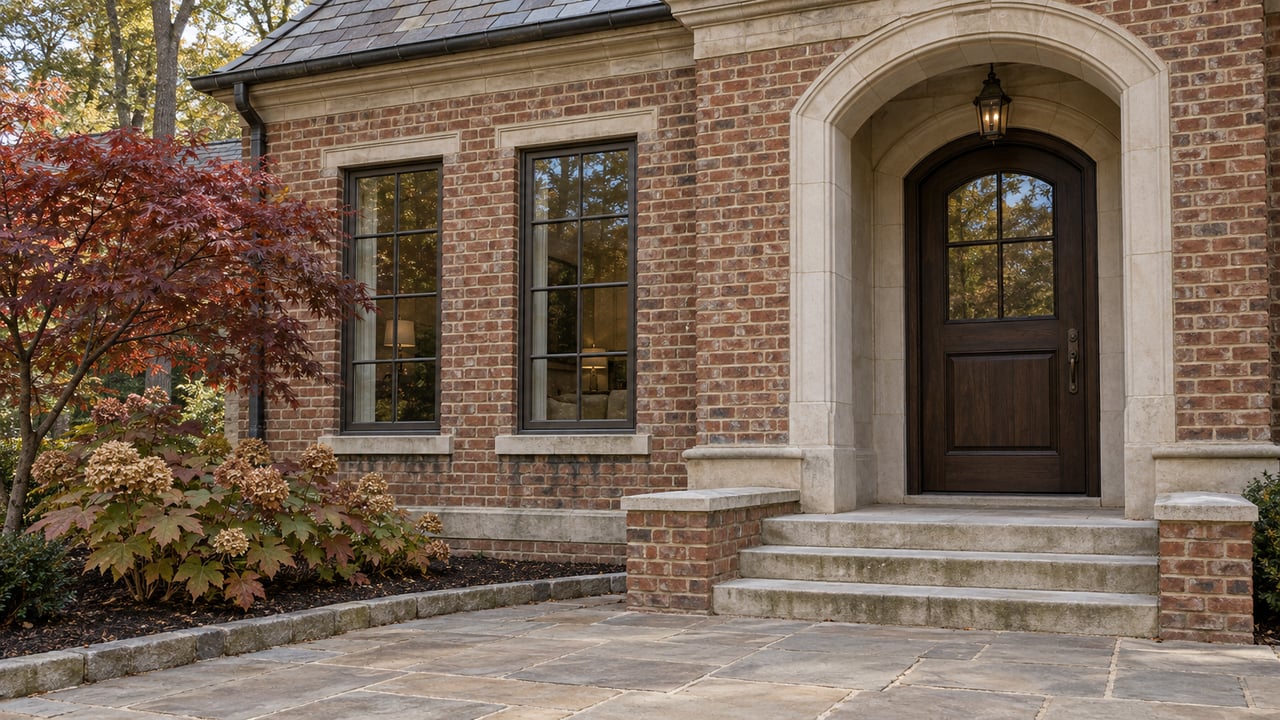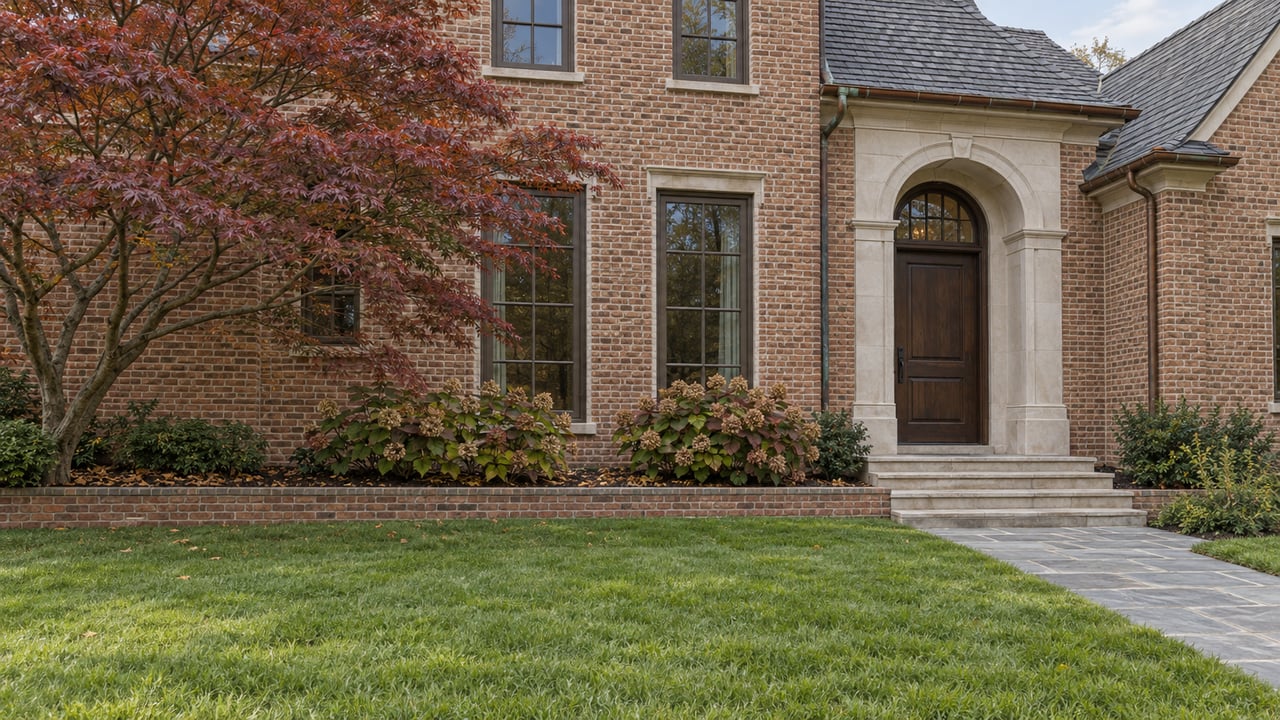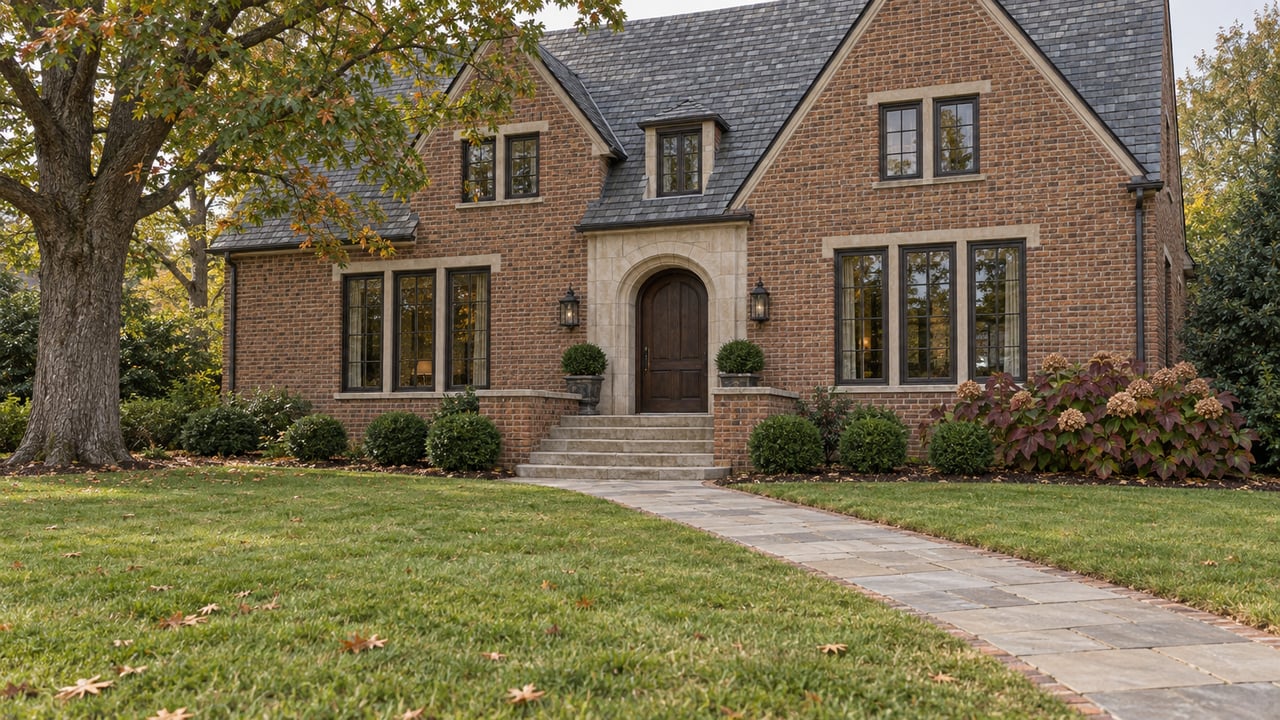
On July 6, 1913, Hattie High and two of her daughters moved into a new Tudor house at Peachtree and 15th Streets. The Atlanta architect Walter T. Downing designed it for her after her husband, the department store owner Joseph Madison High, died in 1906. In the High Museum's own account of those early years, she wanted a fresh start "near the young neighborhood of Ansley Park." Thirteen years later she gave the house away. It opened as the High Museum and School of Art on October 18, 1926.
That date falls on a Sunday this year. The High is marking it by closing part of Peachtree Street for a free birthday party. A little to the east, the Atlanta Botanical Garden is finishing its 50th year. It began as a few volunteer-tended beds around city greenhouses in Piedmont Park.
The two institutions on Ansley Park's edges are now large regional draws. Both began at the scale of the neighborhood itself, as one family's house and a garden plot. This fall's programs at both keep pointing back to those beginnings. For someone who lives a short walk from either, the best events of the season are the ones that retrace that history.
A Museum That Lived in Houses for Forty Years
According to the museum's history by Julia Forbes, its associate director of institutional research, the museum spent its first forty years in several large homes on Peachtree Street, in the block between 15th and 16th. Downing designed every one of them. He also designed First Presbyterian Church at Peachtree and 16th.
Over two decades the campus grew one house at a time:
- The High house, gifted in 1926, held the galleries on its ground floor and classrooms upstairs.
- The Wilkinson home just to the north was added in February 1949 and renamed the Scott Memorial Gallery. It held the Haverty Collection.
- The McRae home just to the south, built by Downing around 1909, became the art school. A covered bridge connected it to the museum so students could cross without going out in the weather.
- The Edgar Poe McBurney House, a 1905 Downing design, opened in 1958 as the McBurney Decorative Arts Center. Its ginkgo tree became well known.
The houses came down one by one. The Scott Memorial Gallery was demolished in 1955 to make room for the High's first purpose-built museum. The High and McRae homes followed in 1963 for the Memorial Arts Center, which is today the Woodruff Arts Center, and the McBurney home was razed in 1967. At the donation ceremony in 1926, Hattie High described her gift this way:
"I saw the need of an art museum in Atlanta, and I recognized the great desire of the city's art lovers for such an institution. In making the gift, I felt I was merely doing my part for Atlanta."
The quote is printed in the High's published history of the house.
The Centennial Events Built Around That Block
Much of the High's October calendar is about the block itself, not just the art inside. The Walking Tour: 100 Years of High Museum History on October 29 is led by Forbes. It covers the architects behind every building the High has occupied, from Downing's design for Hattie High's home to the Richard Meier and Renzo Piano campus that stands today. The tour runs about a mile, from 1:30 to 3 p.m. For anyone who walks Peachtree between 15th and 16th regularly, this tour puts names and dates on buildings that are no longer there.
The other centennial dates this month:
| Date | Event | Time |
|---|---|---|
| Sunday, Oct. 18 | Centennial Block Party on Peachtree Street, free, with live music, DJs, art-making and food vendors | Noon to 5 p.m. |
| Sunday, Oct. 18 | 100 Years of Art in Atlanta, a look back at three turning points in the museum's history | 3 to 4 p.m. |
| Tuesday, Oct. 20 | Member Centennial Tour: Architecture, docent-led | 11 a.m. to noon |
| Wednesday, Oct. 21 | Access for All: Centennial Celebration, free admission | 10 a.m. to 5 p.m. |
| Thursday, Oct. 29 | Walking Tour: 100 Years of High Museum History | 1:30 to 3 p.m. |
| Friday, Oct. 30 | A Haunting at 100, a Halloween night at the museum | 6 to 10 p.m. |
The 100 Years of Art in Atlanta talk brings Forbes together with curator Katherine Jentleson, moderated by Wendy Corona. It is scheduled during the block party, so both fit into one Sunday afternoon on the 100th anniversary of the museum's opening day.
The galleries are just as full. According to the High's 2026 exhibition schedule, "Martin Puryear: Nexus" opened September 25 and runs through January 17, 2027. "Photography as a Way of Life: Minor White, Aaron Siskind, and Harry Callahan" opened October 9 and runs through February 7, 2027. "I SPY! Walter Wick's Hidden Wonders" is on view through January 3, 2027, and "Los Porfiados (The Stubborns)" closes November 29.
A Garden That Kept the Change It Made
The Botanical Garden's history follows the same pattern of starting small. Civic-minded Atlantans proposed a botanical garden in 1973. According to the Garden's 50th anniversary announcement, volunteers tending demonstration beds around the city greenhouses in Piedmont Park persuaded city leaders to lease 30 acres for a public garden. The nonprofit was incorporated in 1976.
The clearest sign of the anniversary is a lasting change to the grounds. For "Atlanta SUPER Blooms!" this spring, the Garden planted about 140,000 bulbs on the Great Lawn, the grassy oval in front of the Fuqua Conservatory. Rough Draft Atlanta covered the display in March. The lawn was due for its ten-year sod replacement anyway, and the plan was to re-sod once the bulbs faded. The Garden dropped that plan because visitors liked the flower beds so much, according to Scott McMahan, vice president of horticulture and collections. The space is now the Great Lawn Garden. It keeps a smaller working lawn for big events and adds mixed borders of shrubs, perennials and seasonal annuals.
The new garden is getting its first full fall. The Garden's Scarecrows in the Garden runs October 1 through November 1. For the 50th anniversary it adds an invitation-only Supersized Scarecrows category, with figures up to 12 feet tall set up on the Great Lawn Garden. Visitors vote for the Visitor's Choice Award with a QR code in the Hardin Visitor Center.
The Garden's remaining fall dates
- Thursdays in October: Fest-of-Ale, with live music remaining on Oct. 15 and Oct. 29.
- Sunday, Oct. 18: Goblins in the Garden, 10 a.m. to 4 p.m. This is the same day as the High's block party.
- Thursday, Oct. 22: the Great Pumpkin-Carving Festival, 5 to 9 p.m., ticketed separately. The scarecrow winners are announced there.
- Nov. 14 through Jan. 10, 2027: Garden Lights, Holiday Nights, with expanded Flower Walk displays, the return of the mosaiculture dragon and new light-show choreography.
The Sunday Both Borders Line Up
October 18 is the one date that brings both halves together. The High's free block party runs from noon to 5 p.m. on Peachtree Street. Goblins in the Garden runs from 10 a.m. to 4 p.m. at 1345 Piedmont Ave. NE. A morning at the Garden and an afternoon on Peachtree covers both of the neighborhood's milestone institutions on the 100th anniversary of the museum's opening day.
The walk between them is changing too. The Piedmont Avenue Complete Street project began construction in mid-June 2025, and Midtown Alliance expects it to be finished by December 2026. The work plan for the week of October 5 called for new curb, drainage, sidewalk and driveways on the west side of Piedmont Avenue between 14th and 15th Streets. Closer to Peachtree, Midtown Green, a temporary public lawn at 98 14th St., opened in September. It has artisan markets on Oct. 25, Nov. 22 and Dec. 13.
To eat between the two, Alonetogether opened on June 3 at 1270 W. Peachtree St. NW. It serves Haitian-French-Creole food, as the Atlanta Journal-Constitution reported. Atlanta Magazine noted its chef-driven nonalcoholic bar.
Hattie High's house stood at Peachtree and 15th from 1913 until 1963. On October 29, Julia Forbes leads a one-mile tour that starts with the architect who designed it.
The history of a house on these streets often shapes how buyers see it, from a Downing-era design to a renovation that respects the original. If you are thinking about what your Ansley Park home's history means for its value, Patti Junger and her family team, with their background in architecture and building, would be glad to help. Request a complimentary market valuation and private consultation.